
Technical guide
How to read a technical rider without being a technician
You've booked a band and received a PDF full of diagrams and acronyms. Here's what it really says, what is essential and what is open to discussion.
What it is
A rider is a list of conditions the band needs in order to play
The technical rider is the document in which an artist or band describes what they need to find set up when they arrive. It isn't a letter to Father Christmas, nor a closed contract: it is the starting point for a conversation between their technician and yours.
It usually has three parts. The technical rider itself: sound system, consoles, microphones, monitoring and sometimes lighting. The stage plan or stage plot: a drawing showing the position of each musician and each item. And the production rider or hospitality rider: dressing rooms, catering, schedules, accommodation. That last part isn't the sound company's business, but it's worth reading because it affects the day's timetable.
Why it's sent to you
Because in most contracts the promoter — you, the town council, the association, the company — is the one who provides the sound system. The band brings its instruments and, with luck, its technician. Everything else comes from the local supplier, which is us. That's why the first thing to do with a rider is forward it to whoever is going to set up.
The glossary
The acronyms you'll come across
| Term | What it means |
|---|---|
| PA / System | The sound directed at the audience. The rider usually asks for a professional system with a certain power and coverage for the expected audience size. |
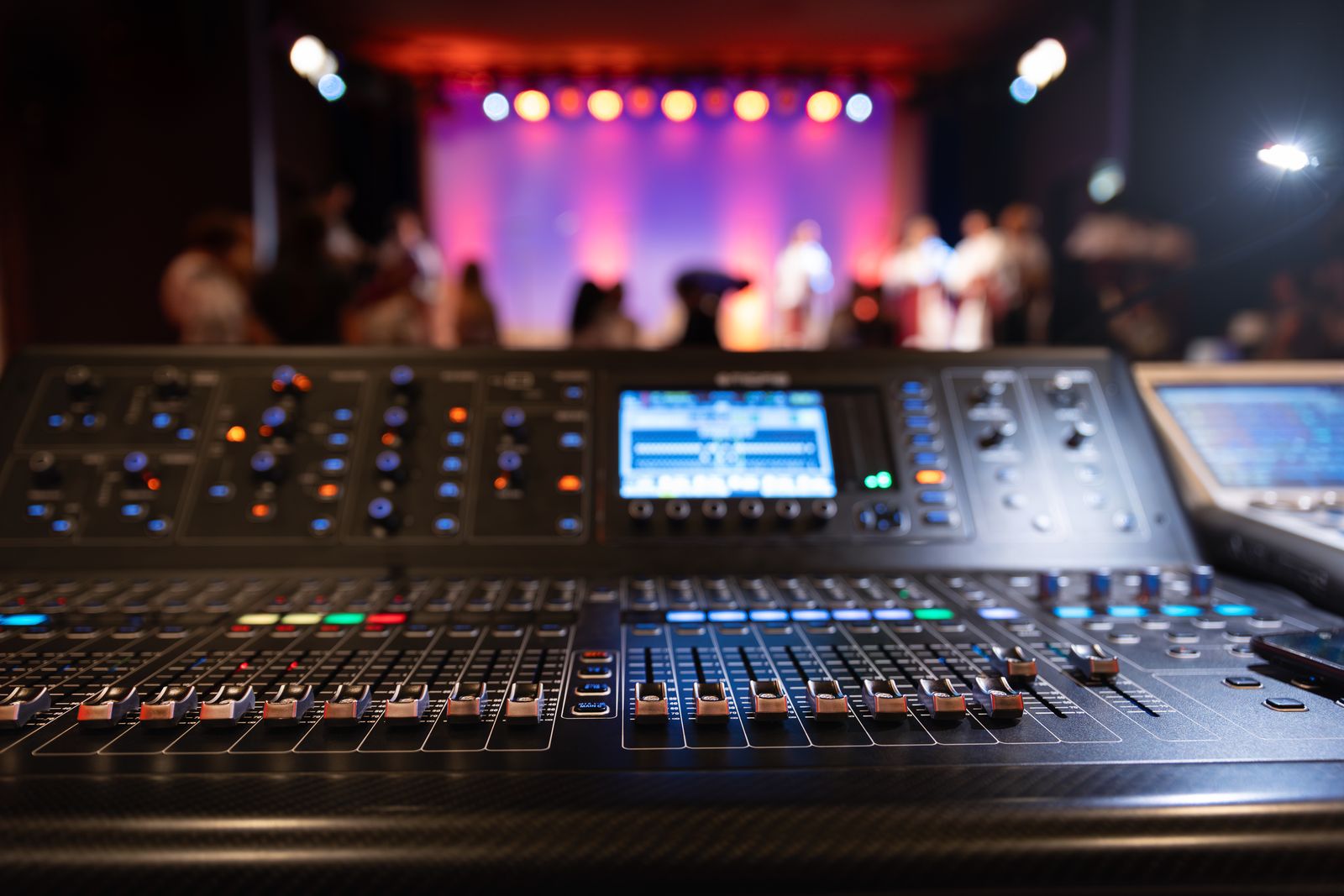
| FOH | Front of House: the control position in the audience area, where what the audience hears is mixed. The console located there is also called this. |
| Monitors / Wedges | What the musicians hear on stage. A number of independent mixes is requested: each send is a different mix. |
| IEM | In-ear monitors: monitoring through earpieces instead of wedges. If the band brings them, the stage set-up changes. |
| Input list | The numbered list of everything that gets plugged in: every microphone, every line, every instrument. It is the most important part of the document. |
| Patch | How each input on that list is assigned to a specific channel on the console and the stagebox. |
| Backline | The on-stage instruments and amplifiers: drum kit, guitar and bass amps, keyboards. |
| Line check / Soundcheck | The line check confirms that every signal is coming through; the soundcheck sets the mix. They are not the same thing and take up different amounts of time. |
| DI | Direct injection box: adapts an instrument's signal to the desk's input. Several of them appear in almost every rider. |
What to look at first
Four details that decide the quote
1. The number of channels on the input list
This is the detail that most affects the equipment. A six-channel band fits on a small desk; one with a fully miked drum kit, horns and backing vocals goes up to thirty-odd channels and calls for a digital console and stagebox. If you only look at one line of the rider, look at this one. The options are detailed under mixing consoles.
2. How many monitor mixes
Each independent send is one more mix to do and, if they are wedges, one more speaker on stage. Four sends is normal for a medium-sized band. You can see more under stage monitors.
3. What backline is requested and who brings it
This is the point that causes the most disputes. Many riders include drums, amplifiers and keyboards on the assumption that the promoter will provide them. Clarifying it in writing before signing avoids discovering the day before that you need to hire a complete backline.
4. The schedule
Arrival time, set-up time, soundcheck time and showtime. If the rider asks for a soundcheck at six and the town council won't let you close the street until seven, that conflict has to be resolved beforehand, not on the day. The permits that affect this are covered in this guide.
Negotiating
What is open to discussion and what isn't
Normally non-negotiable: the number of channels on the input list, the monitor sends, having a soundcheck and the stage safety conditions. Cutting back there means cutting back the concert.
Almost always negotiable: specific brands and models. A rider usually names reference models, and it is normal to accept equivalents of a similar class. A reasonable technician will accept an equivalent substitute without any problem; it's best to propose it in advance and in writing, not spring it on them on the day of the show.
It depends: the size of the PA. Riders are usually written for the biggest stage the band expects to play. If your event has two hundred people in a small square, setting up the rider's system to the letter is throwing money away. The right conversation is: "this is the real audience size and the venue, how about this configuration?" How to size a system is explained in this power guide.
The rule of thumb
Put the band's technician in touch with the sound supplier as soon as you have the rider, and step aside. Two technicians sort out in one call what takes two weeks of emails between non-technical people and ends in a misunderstanding.
Keep reading
Related links
Frequently asked questions
Rider FAQs
The band asks for a specific desk and you don't have it. Is that a problem?
Hardly ever. The usual approach is to offer a console equivalent in channels and features and confirm it with their technician. What you should do is sort it out in good time, not on the morning of the concert.
Who provides the backline?
It depends on what you've signed. Many riders assume it is included in what the promoter provides. If it isn't clear, ask in writing: it's the most expensive last-minute surprise.
Is a soundcheck always necessary?
With live music, yes. At the very least a line check to make sure every channel is coming through. Without it, the first song of the concert becomes the soundcheck, and the audience notices.
The rider asks for a huge system for a small event. What do I do?
Talk about it. Riders are written for the general case. Given the real audience size and venue, the band's technician will usually accept a proportionate configuration.
What if the band doesn't send a rider?
Then you need to ask about the line-up, what instruments they're bringing and how many microphones they need. It's the same job, done over the phone.
Send us the rider and we'll tell you what's needed
We'll review it and tell you what is essential and what can be adjusted to the real size of the event.
