Lighting
Event lighting rental in Seville
Light to see by, light to set the mood and light for the show. We explain which one you need, who will control it and where the power comes from, before you sign anything.
- Types
- LED, moving heads, decorative, effects
- Control
- DMX, standalone or remote control
- Structure
- Truss and lifting towers
- Set-up
- Included
- Area
- Seville and province
What light does
Three different jobs we all call «lighting»
Almost every lighting quote that goes wrong starts with the same misunderstanding: the client asks for «some lights» and the technician doesn't know whether they want to see, to set the mood or to impress. These are three different functions, with different equipment and different prices.
Seeing: functional light
It's the least eye-catching and the one you can never do without. It lights faces, lecterns, tables, stairs, the bar and the way to the toilets. If your event has speeches, an awards ceremony, a wedding ceremony or cameras, this light comes first: a badly lit face looks bad in person and worse on video. It's done with controlled white-light fixtures, well positioned and at just the right output. When there's recording or streaming, the colour temperature also needs care so the camera doesn't shift towards orange or blue.
Atmosphere: light that decorates
It's the light that changes how a space feels without anyone looking straight at a fixture. Washing a wall in colour, picking out the arch of a hacienda, giving the banquet tables a warm glow, lighting up a façade or hanging festoon lights over a drinks area. It uses little power, goes up quickly and is what shows most in the photos. It's the basis of decorative wedding lighting.
Show: light that moves
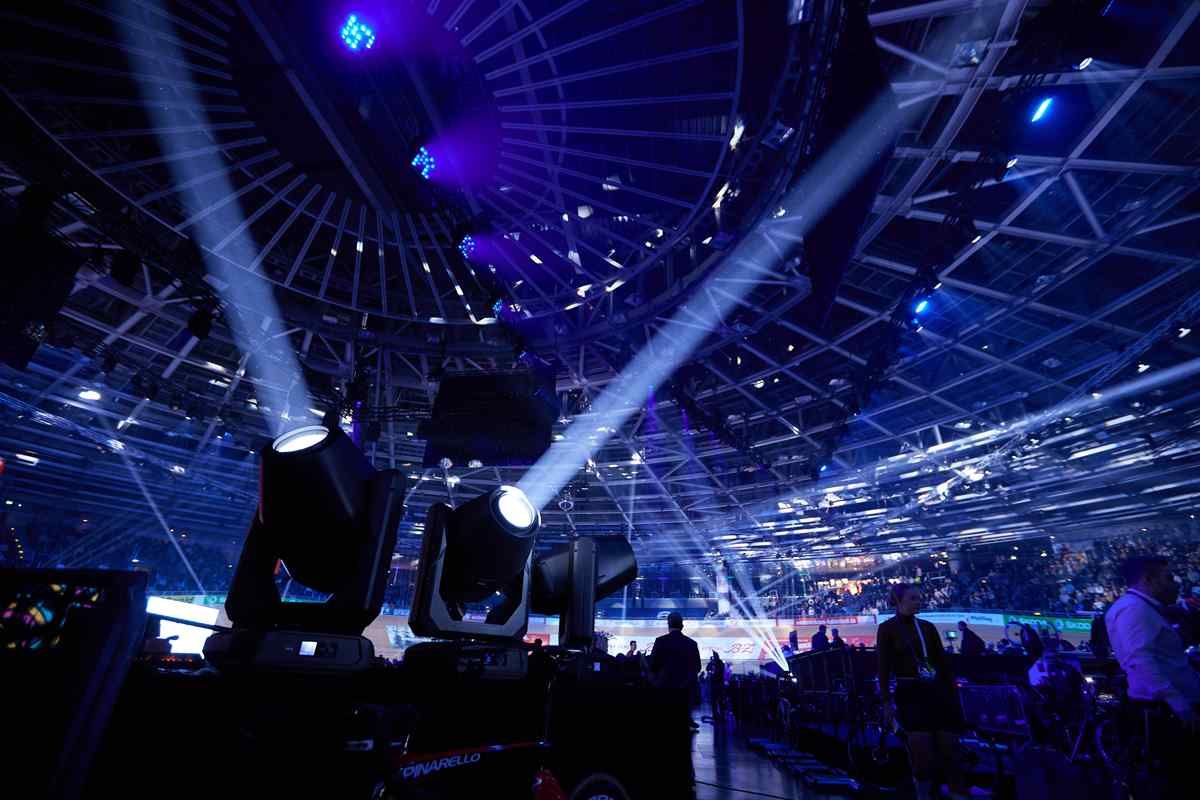
Sweeping beams, colour changes in time with the music, backlighting on stage, haze that makes the beams visible. This is where moving heads, effects and someone programming or busking the show come in. It's the most expensive part, the one that needs the most structure and the one least needed at an institutional event or a conference.
Most events need all three, but in very different proportions. A wedding is 70 % atmosphere and 30 % show once the dancing starts. A concert is exactly the opposite. A conference is almost entirely functional light. Deciding that balance before you look at catalogues saves money and avoids the classic set-up of «lots of lights and none where they were needed».
Equipment
What we rent in lighting
Each type solves a specific problem. Open the one you're interested in and we'll explain how to choose.
01 / LED
LED fixtures and bars
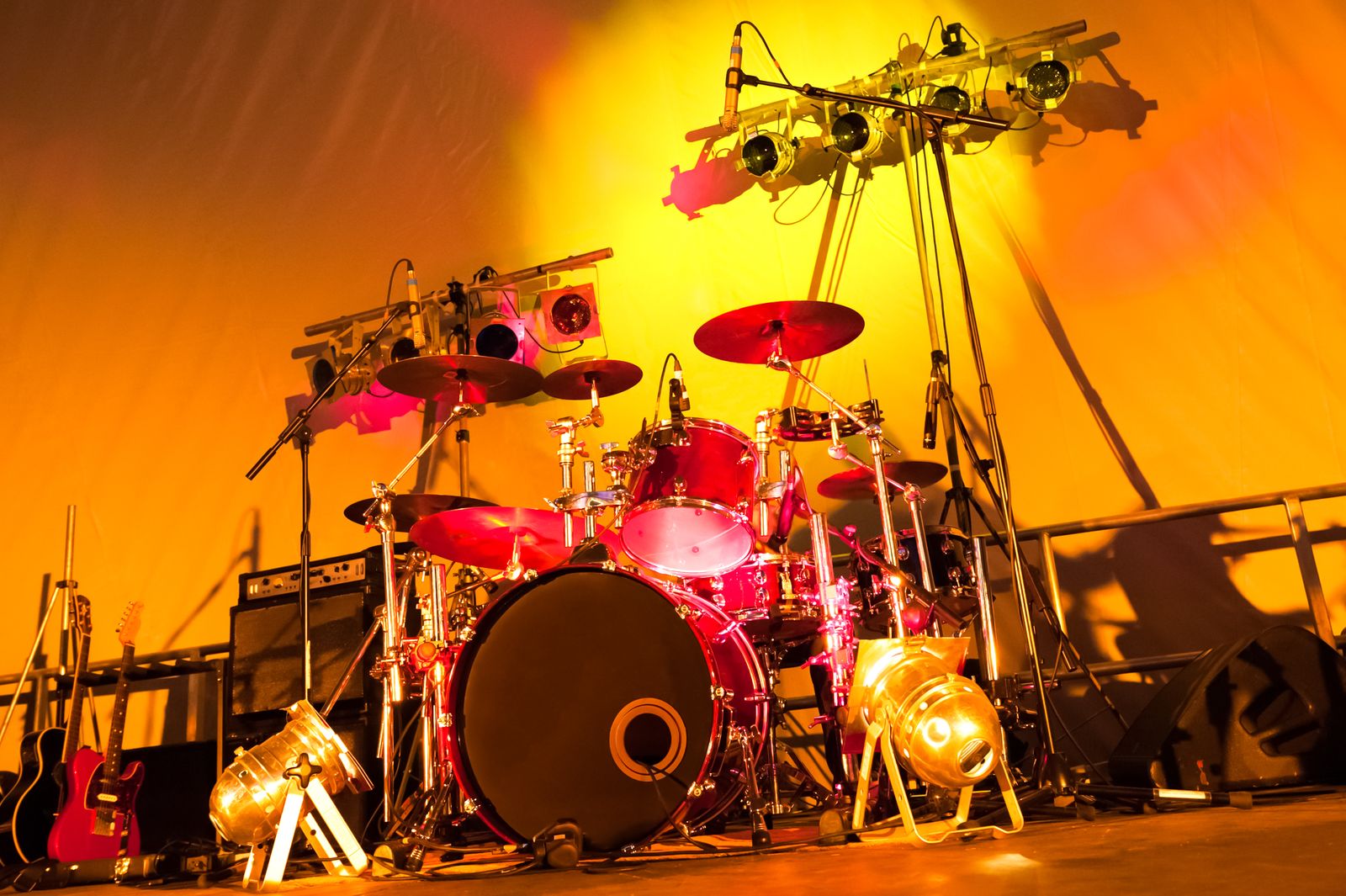
LED PARs, bars and RGBW wash lights for colour, uplighting and ambient light. DMX-controlled or standalone.
View details
02 / Show
Moving heads
Beam, spot and wash fixtures for live shows, parties and presentations. Programmed or in time with the music.
View details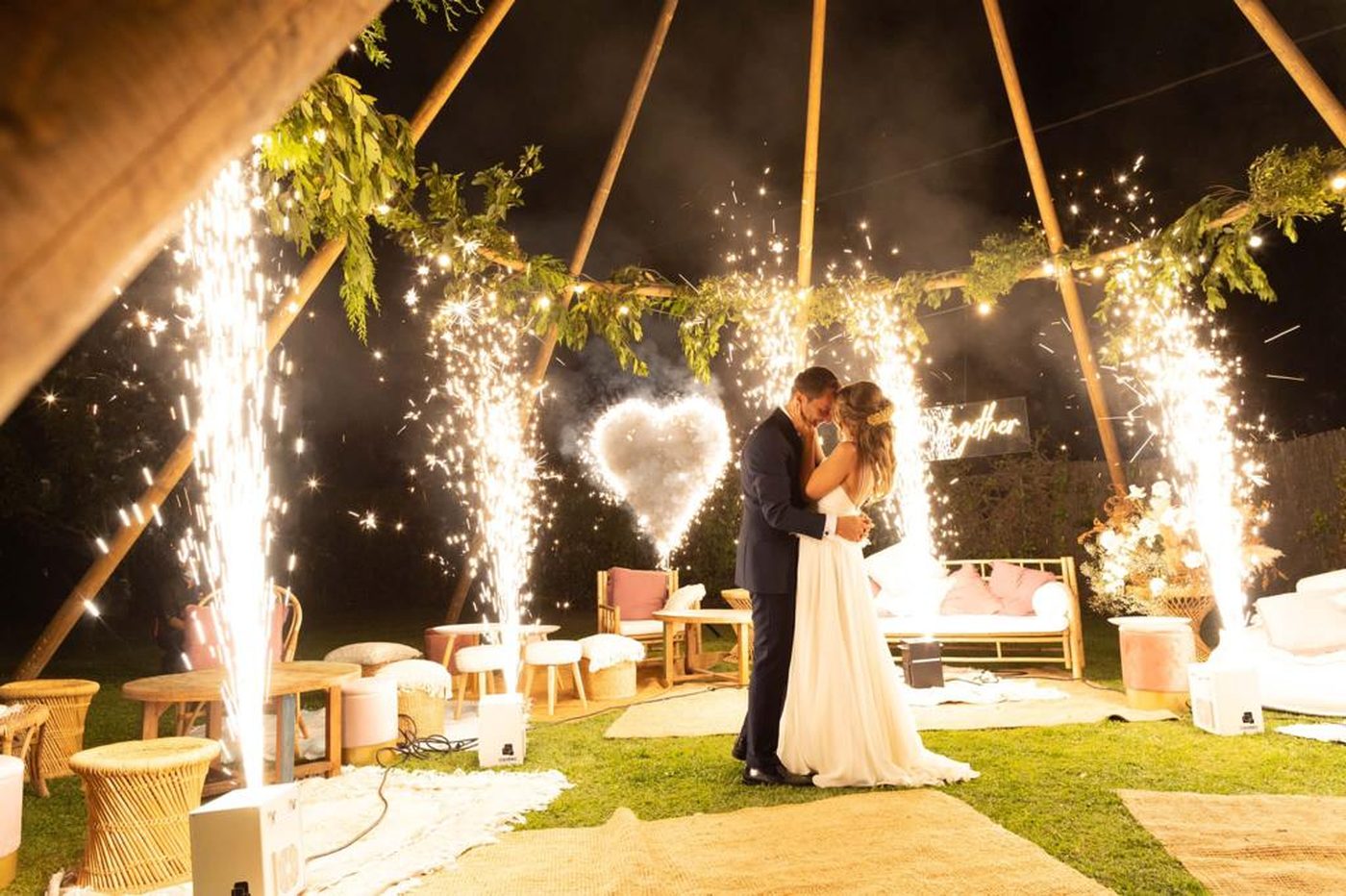
03 / Weddings
Decorative lighting
Uplighting, festoon lights, warm light on tables and illuminated façades for haciendas and country estates.
View details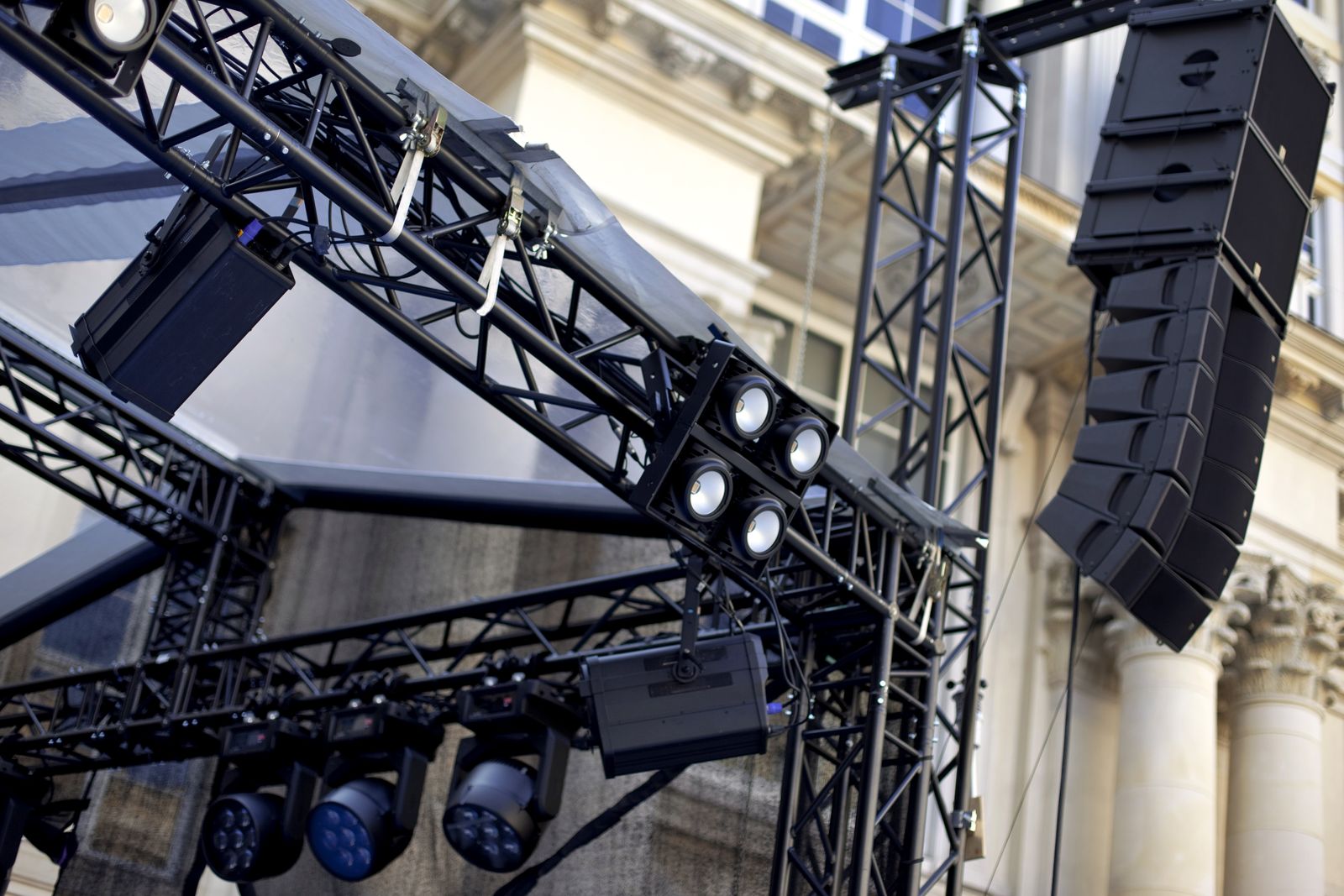
04 / Structures
Truss and towers
Aluminium truss and lifting towers to rig lighting, sound and screens safely.
View details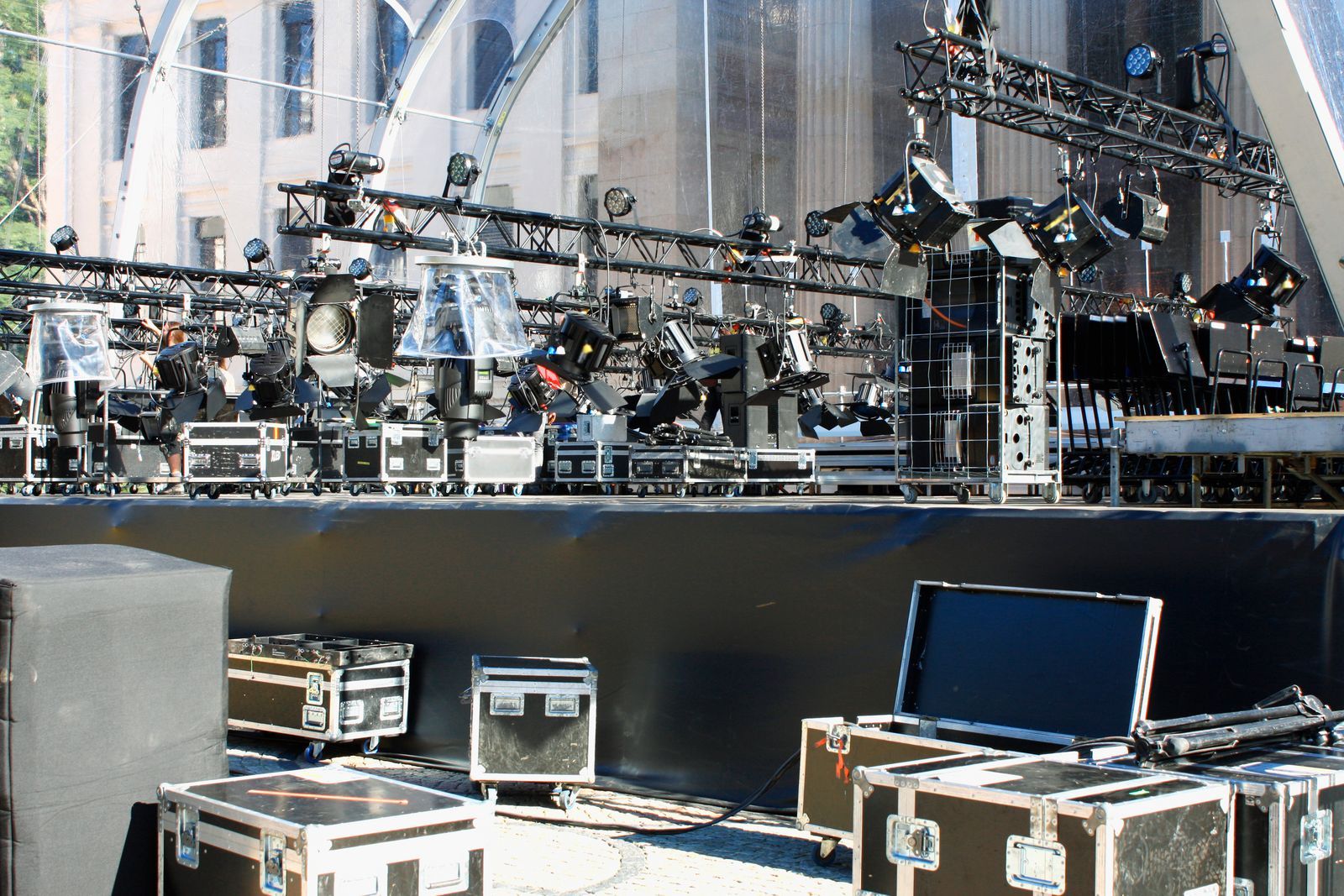
05 / Effects
Smoke and effects
Smoke machines, low fog, confetti and cold sparks. With the precautions each venue requires.
View details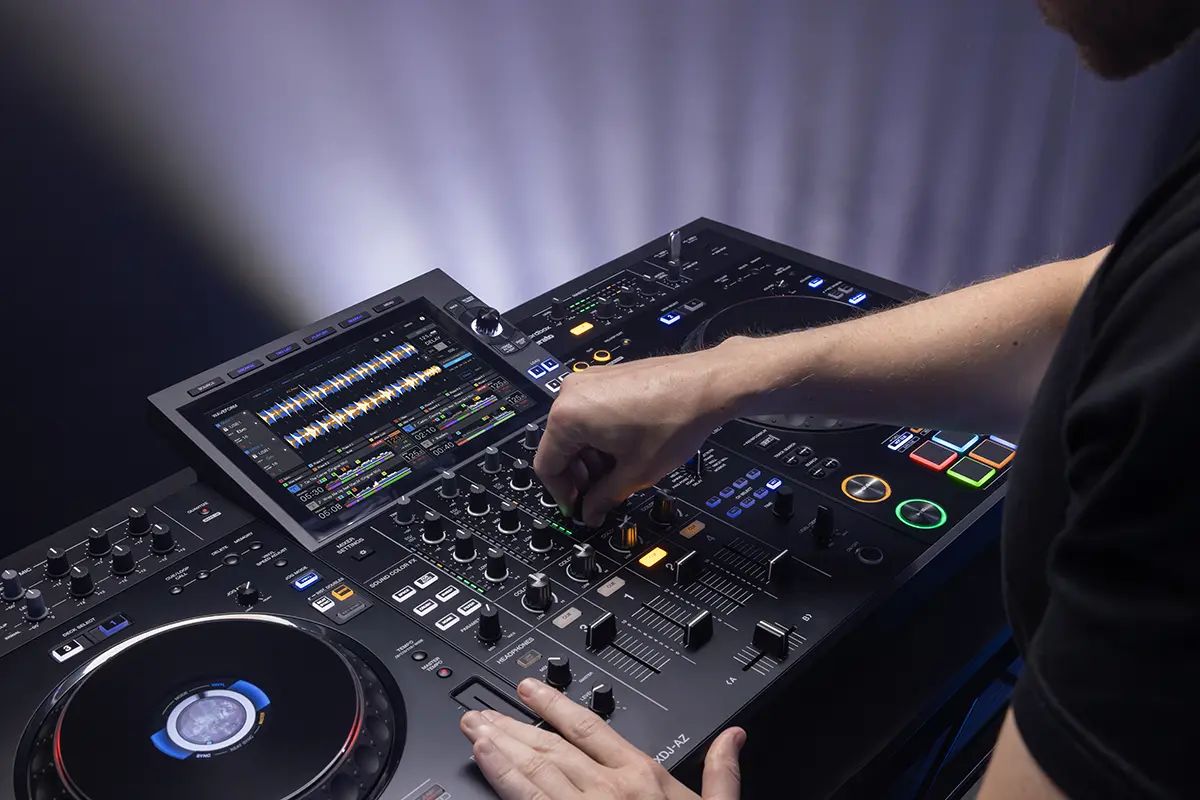
06 / Floor
LED dance floor
LED and mirror dance floors built to size, for weddings, galas and private parties.
View details
Control
What DMX is and why you'll hear about it
DMX512 is the language a lighting desk uses to talk to the fixtures. It sounds like jargon, but it affects the price and the set-up time, so it's worth having a rough idea of it.
A DMX cable runs from the desk or controller into the first fixture, then on to the next, and so on in a chain. Each fixture has an address and uses a number of channels: one for red, one for green, one for the dimmer, one for movement… A DMX universe has 512 channels, and when they're full you have to open another. That's why a rig with lots of moving heads isn't simply «more lights»: it's more cabling, more addressing and more programming time.
Three ways to control the lighting
- Standalone or sound-active: the fixture changes colour on its own, or in time with the music. No desk or control cabling needed. Perfect for a small party, a birthday or a bar.
- Remote or app: you choose colour and intensity from a remote control. This is the norm for wedding uplighting, where the colour is set once and left alone all night.
- DMX desk with a technician: programmed scenes, changes for each song, clean blackouts, speaker entrances and exits. It's what a live show, a gala or a scripted presentation needs.
The useful question isn't «how many lights will you give me?» but «is anyone going to change the lighting during the event?». If the answer is no, you save on control. If it's yes, the technician isn't an extra: they're half of the result. The same goes for sound with a technician.
How to choose
What each event needs
| Event | Usual approach | Control |
|---|---|---|
| Ceremony or institutional event | White light on the lectern and front rows | No live control |
| Conference or presentation | Front light for speakers and cameras, soft coloured background | Fixed scenes |
| Wedding at a country estate or hacienda | Uplighting, festoon lights, warm light on tables, a touch of show for the dancing | Remote + scenes |
| Private party or birthday | LED bars and an effect or two over the dance floor | Standalone or sound-active |
| Concert or verbena (street party) | Backlights, moving heads, haze and structure to rig from | DMX desk with a technician |
| Fashion show | Even, clean light along the catwalk, with no harsh shadows | Scenes for each walk-out |
Rigging and structure
Where the lights are hung (and why you can't rig it yourself)
Light goes much further when it's up high. As soon as you want height, structures, loads and responsibilities come into play that can't be improvised with a stepladder.
A fixture at eye level dazzles and flattens. The same fixture at three or four metres sculpts, separates the performer from the background and stops bothering the audience. There are three ways to get it up there: hang it from a venue rigging point, hang it from truss supported on lifting towers, or mount it on tripod stands. Each has a different load limit and none of them can be done «by eye».
What needs checking before anything goes up
- What weight the point can take. A false ceiling, a decorative beam or a wooden pergola are not load-bearing points, however much they may look like it. Without data from the venue, nothing gets hung.
- How the load is spread across the truss. Total weight is not the same as where it sits: a load concentrated in the middle of a long span performs far worse than one that is spread out.
- Safety fittings. Every hung fixture has its own steel safety cable as well as the clamp. It's not optional.
- Wind. Outdoors, a truss loaded with fixtures and banners acts like a sail. It gets ballasted and braced and, if the forecast turns nasty, it comes down.
- People walking underneath. If people are moving about under the structure, the precautions change, and often the location does too.
That's why we rig the structure ourselves and don't hand it over «as loose kit» for the venue staff or the groom's friends to put up. It's not a sales thing: a badly ballasted tower or a fixture without a safety cable is an accident waiting to happen. If the event includes a stage or an LED screen, the structure is planned for everything at once, not piece by piece.
Power
How much lighting your socket can handle
LED has changed the maths of power consumption, but it hasn't done away with it. It's still the number one cause of scares at country estates and older venues.
An LED fixture draws a fraction of what the same effect used to draw with a halogen lamp, and it doesn't heat up the space either. That makes set-ups possible that were impossible years ago on a country estate's electrical installation. The problem these days is rarely total power but what each thing is plugged into: if all the lighting, all the sound and the kitchen share the same circuit, the breaker trips at the worst possible moment.
Before setting up we always ask the same things: where the distribution board is, what protection it has, how many free circuits there are and whether anything else will be plugged in there that night. With that we balance the loads, run extension cables of the right gauge and, if the venue can't cope, we look at a generator or a battery-powered system for areas without a socket. Outdoors we add protection against damp and cable ramps wherever guests cross.
An honest warning: if you tell us on the day of the event that there's only one socket in the garden, the solution will be worse and more expensive than if we discuss it two weeks ahead. The electrical installation is the first thing we look at on the site visit, not the last.
The service
What lighting rental includes
So you know what you're comparing when you ask for two quotes.
A lighting proposal, not a list of fixtures
We tell you what gets lit and with what intention. The equipment list comes from that, not the other way round.
Transport, set-up and take-down
We deliver, set up, cable and collect at the end, even if take-down is in the early hours.
Cabling and structure
Extension cables, DMX cabling, tripod stands, truss, ballast and safety fittings. No surprise charges.
Checked equipment and spares
Fixtures leave the warehouse tested, and on large set-ups backup equipment travels too.
A technician if the event needs one
If the lighting has to change during the event, someone is on the desk. If not, we leave it set and explained.
Coordination with the rest of the set-up
Lighting, sound, video and structure are planned together so they don't clash over schedules or sockets.
Often booked together
What hardly ever comes on its own
Lighting is half the scene. The other half is usually sound, a screen and a structure to hold both.
If you're putting together a full event, it makes sense to book the sound, lighting and structure at the same time: the same truck, the same crew and a single load-in schedule. When each thing comes from a different supplier, whoever arrives late holds everyone up and sharing out the power turns into a negotiation in the middle of the garden.
How much lighting do I need for my event?
It isn't measured in number of fixtures, it's measured in surfaces. Tell us what needs lighting (a wall, the tables, a stage, the dance floor) and with what intention, and the equipment follows from that. An indoor hall needs far less kit than a garden, where light gets lost in the surrounding darkness.
Do I need a lighting technician all night?
Only if the lighting has to change during the event: a live show, a scripted gala or a presentation with entrances and exits. If the lighting is decorative and stays fixed, we leave it programmed and set, and nobody needs to stay.
Can you light the venue without drilling or touching the walls?
Yes. Most set-ups are done with floor-standing fixtures, tripod stands and towers with truss, without fixing anything to the building. In listed or rented venues that's standard, and it's best to tell us beforehand so we can plan for it.
Does lighting bother the neighbours the way sound does?
Lighting isn't subject to decibel limits, but some venues do prohibit projecting beams outside or towards windows. With moving heads outdoors you have to aim with care. Noise is covered by separate regulations, which we explain on the blog.
Can it be set up on the day of the event?
A small set-up, yes. One with structure, moving heads and programming needs the venue clear several hours beforehand, and sometimes the day before. It's the first thing to negotiate with the venue: without a set-up slot, there's no set-up.
Do you rent just the equipment without set-up?
For simple kit (LED bars with a remote, a smoke machine), yes. For flown structures, programmed moving heads or truss, we don't: the set-up is part of the system's safety and we can't take responsibility for anything put up without us.
The lighting
What the lighting looks like once it's rigged
Fixtures, truss and effects, hung and focused before anyone walks in.
Tell us what you want to light
With the venue, the date and a photo of the space, we can already tell you which lighting makes sense and which doesn't.
