
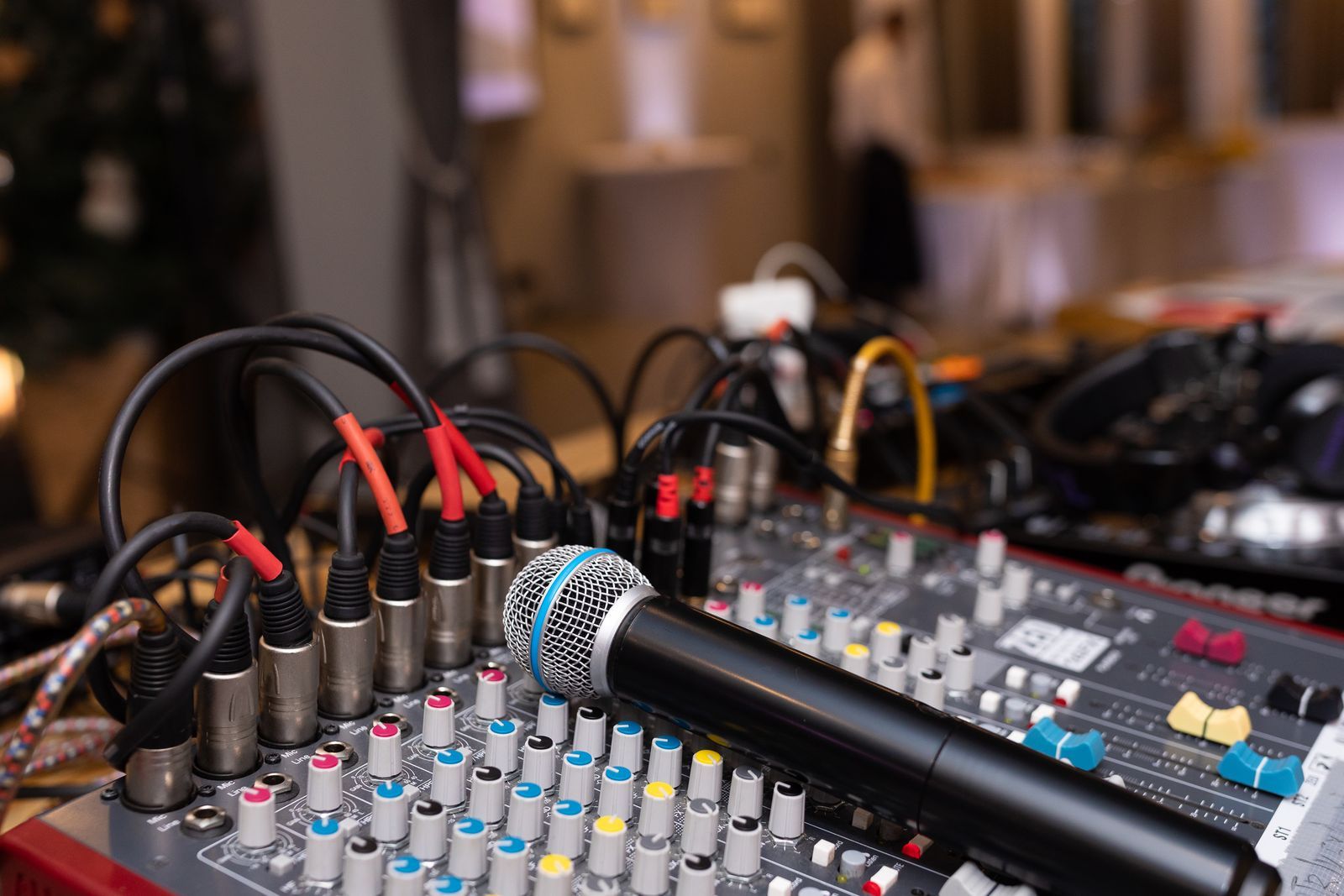
Sound capture
Microphones for rent for events, music and conferences
The cheapest piece of kit and the one that saves or ruins the most events. Handheld, instrument, tabletop and ambient mics, each with the stand and cable it needs.
- Types
- Handheld, lavalier, headset, instrument
- Includes
- Stands and cabling
- Batteries
- Fresh for every job
- Area
- Seville and province
Choosing a microphone
There's no such thing as a good microphone: there's the right one for each job
The same microphone that's perfect for a vocal on a noisy stage is a disaster for recording a choir, and vice versa.
Two things set microphones apart: how they pick up sound (dynamic or condenser) and where they pick it up from (the polar pattern). That explains almost everything that happens at an event.
Dynamic or condenser
A dynamic mic handles high levels, is rugged, needs no power and rejects a good deal of what comes from the sides. It's the mic for live vocals, guitar amps and snare drums. A condenser is much more sensitive and detailed, picking up more nuance and more air (and also more of the room, more of the speakers and more of the air conditioning). It's the one for acoustic instruments, choirs, cymbals and ambience, and the one that needs the most careful placement if there's sound reinforcement in the same room.
The polar pattern, which is what prevents feedback
A cardioid microphone mainly picks up what's in front of it and rejects what's behind. That's why the speakers always go in front of the microphone: if they end up behind it, the mic hears them, the system feeds back and you get that squeal. Half the feedback at an event is solved by moving things around, not by touching the EQ. We cover it all in how to avoid feedback.
Catalogue
Types of microphone and what each one is for
Voice
Handheld microphone
The classic, wired or wireless. For presenters, speeches, interviews and singing. Rugged and no surprises. Ordered in pairs when speakers take turns.
Discreet
Lavalier and headset
For anyone who needs their hands free or wants to appear in photos without a mic in front of them: officiants, speakers, activity leaders. A headset keeps a constant distance from the mouth and sounds much more stable than a lavalier.
Lectern
Lectern and tabletop microphones
Gooseneck mics for lecterns, top tables and press conferences. Fixed in place, adjusted once, and they don't depend on anyone holding them properly.
Instrument
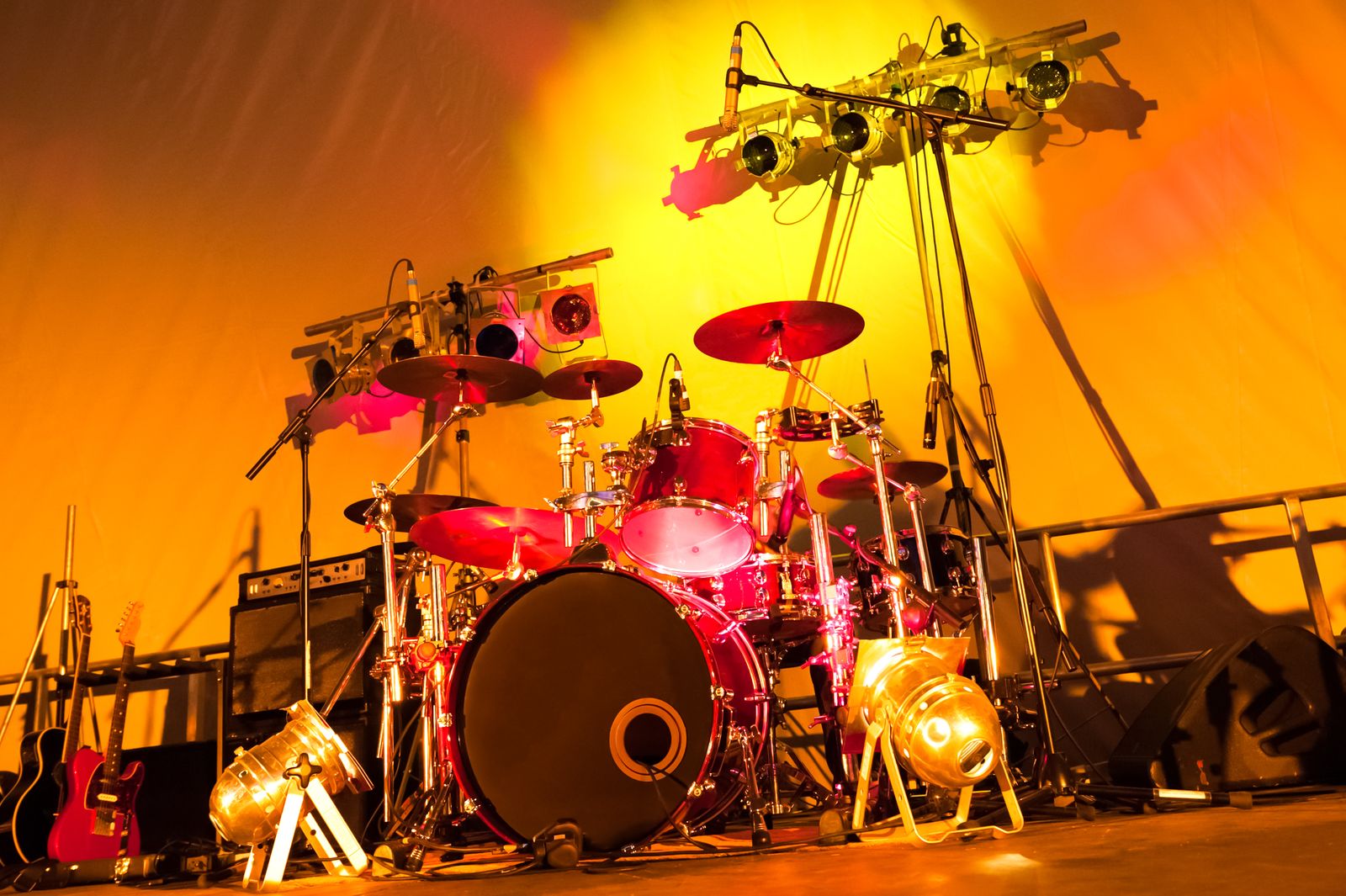
Instrument microphones
Drum mic kits, clip-on mics for brass, wind and percussion, and condensers for acoustic guitar, piano and strings. With stands, boom arms and clips.
Ambience
Ambient microphones
For choirs, audience and room pickup when recording or streaming. Placed high up and away from the speakers, otherwise they pick up more PA than event.
DI boxes
DI boxes and accessories
DIs for keyboards, basses, laptops and DJ mixers, plus stands, clips, windshields and patch leads. It's what nobody remembers to order, and without it half the stage can't be connected.
How many and where
How many microphones to order and how to position them
The quick rule: one for each person who will speak at the same time, plus a spare on the table. At a civil wedding that usually means a headset for the officiant, a handheld for readings and another as backup. At a four-person panel discussion, four microphones (not two being passed around, because the handover is always late and always sounds like a thump).
Placement mistakes we see again and again
- Microphone too far from the mouth. Every centimetre further away means turning up the gain, and with the gain everything else goes up too: the room, the speakers and the feedback.
- Lavalier hanging at the neck instead of on the chest, or covered by a scarf or tie.
- Speakers behind the lectern. The classic at official ceremonies: a squeal on the very first sentence.
- The same microphone for everything. A dynamic vocal mic aimed at an acoustic guitar sounds dull, and a condenser in front of a kick drum can't handle the level.
If the event is being recorded or broadcast
The strategy changes: you need a clean feed from the desk, controlled ambience and, ideally, microphones that don't rely on someone remembering to speak close to them. For hybrid events, it's worth looking at how the audio integrates with streaming and live video production right from the quote stage.
Reference
What to order for each type of event
| Event | Typical microphones | Desk channels |
|---|---|---|
| Civil or religious ceremony | Headset for the officiant + handheld for readings | 2 channels |
| Press conference or panel discussion | One gooseneck per speaker | 3 – 6 channels |
| Presentation with video | Handheld or headset + laptop input | 2 – 3 channels |
| Acoustic duo | Dynamic vocal mic + guitar condenser + DI | 3 – 4 channels |
| Band with drums | Drum mic kit, bass via DI, guitars and vocals | 12 – 20 channels |
| Flamenco | Vocals (cante), guitar, palmas (handclaps) and dance footwork | 4 – 8 channels |
What's included
What comes with each microphone
- The right stand: straight stand, boom arm, clip or gooseneck with a heavy base.
- Cabling of the length the set-up needs, with slack to let the speaker move.
- Windshield or pop filter when the event is outdoors or there are a lot of plosives.
- Fresh batteries in everything wireless, and a spare set on the table.
- A real test before the event, with the person who'll be speaking if they're available.
We work with microphones from established live-sound manufacturers such as Shure and Sennheiser. If you need cable-free systems, head to wireless microphones, where we explain frequencies, range and how many can run at once without interfering.
Frequently asked questions
Questions about microphone rental
How many microphones do I need for a wedding?
Two cover almost any ceremony: a headset or lavalier for the officiant and a handheld for readings and the speeches. A third as backup costs little and saves a lot of grief.
Headset or lavalier?
Headset, whenever the look allows it. It keeps a constant distance from the mouth, so the level doesn't wander when the person turns their head, and it allows more gain before feedback. A lavalier is more discreet but far more temperamental.
Can I plug in my own microphone?
Yes, if it's a professional microphone with a standard connector. Let us know beforehand so we can allow a channel for it and check whether it needs phantom power.
Do instrument microphones come with stands and clips?
Yes. Everything needed to position them is included: stands, boom arms, clips and patch leads. DI boxes for keyboards, basses and laptops too.
What if a microphone fails in the middle of the event?
That's why we carry spares of the essentials. With a technician in the room, the swap takes seconds; without one, we leave a backup microphone ready, already connected and with its level set.
Equipment
The equipment, set up and cabled
This is the equipment this page talks about, and how it looks once it is set up.
Tell us who's going to speak and what's going to be played
With that, we prepare the full microphone set-up, with stands, cables and spares. Quote within 24 hours.
