
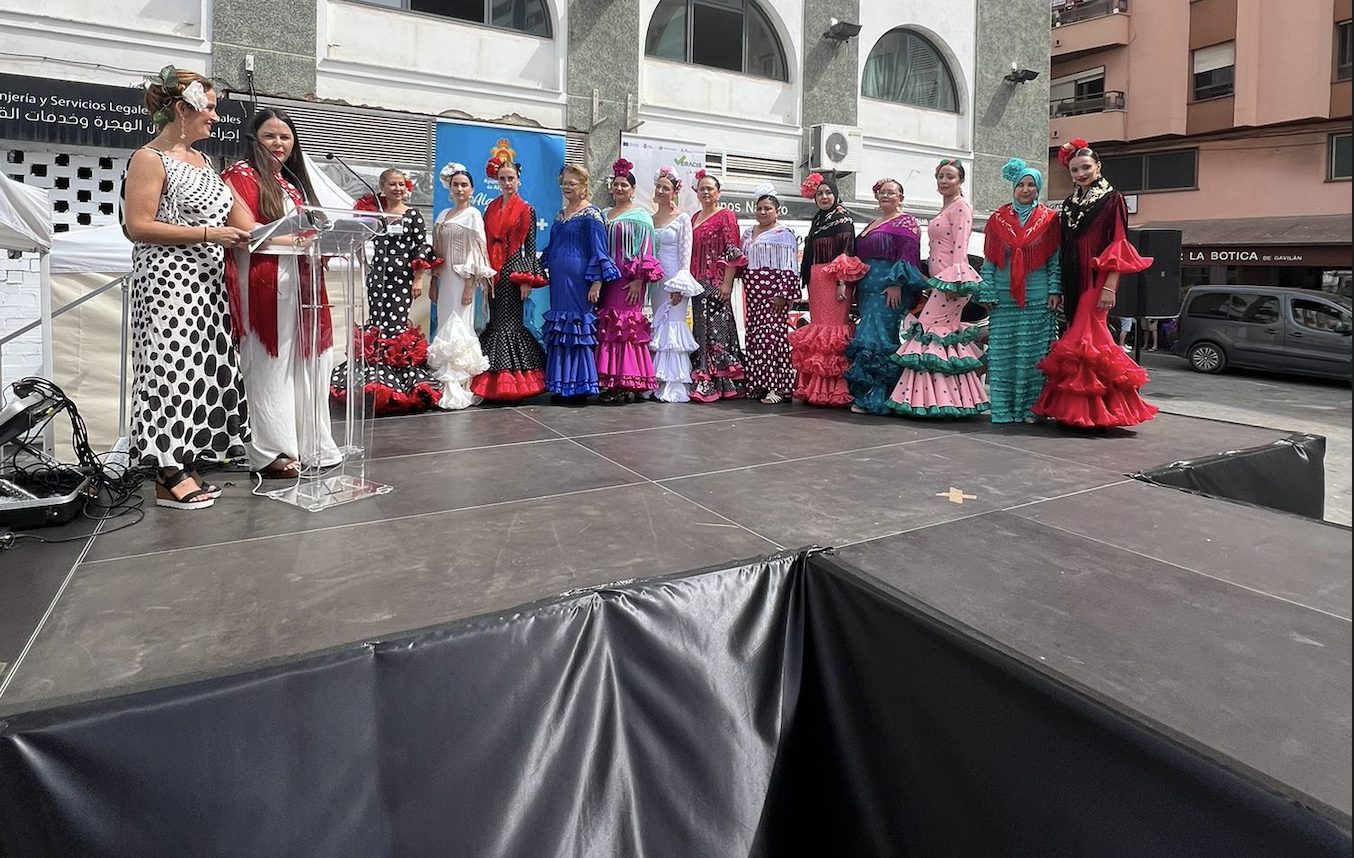
Fashion and catwalk
Sound and lighting for fashion shows
A fashion show is a timed performance: every walk has its own music, its own lighting and its exact seconds. If the audio comes in late, the whole sequence falls apart.
- Set-up
- Catwalk, sound and lighting
- Key
- Music by sequence and measured timings
- Rehearsal
- Technical run-through before the show
- Venues
- Hotel, courtyard, hall or marquee
How a fashion show is set up
Catwalk first, music next and lighting on top
The order matters: the catwalk goes in first, the sound is positioned according to where the audience sits, and the lighting is hung once we know exactly where the models will walk. Changing the order costs hours.
The catwalk
It defines everything else. Its height, its length and which way the audience faces determine where the speakers and the control desk go. A modular catwalk lets us adapt the shape to the space: straight, T-shaped or with a side exit. The cabling runs underneath, so nothing is visible from the seats.
Music by sequence
A fashion show doesn't run on a playlist: it runs on blocks. Each walk or collection has its own track, with its own in and out. The edits are prepared in advance, the timings are marked with the show director and everything is triggered from the desk. A clumsy crossfade between two sequences is more noticeable than any other mistake of the night.
The voice
Many shows include a welcome, thanks to the designer or a final presentation. You need a wireless microphone with the level already set, and the music dipping to a level that allows speech without killing the atmosphere.
Catwalk lighting
It's half the job. The light has to be frontal and clean so the clothes show their true colour and the photos come out well; backlighting looks lovely live but ruins the images. We work with LED spotlights hung from truss along the catwalk, and moving heads for the opening and closing moments. The haze machine is used sparingly: it gives the beams body, but too much fogs the photos.
Show floor plan and running order
Number of walks, order of the collections, estimated duration and presentation moments. It's the foundation of the set-up.
Runway set-up
Modules, height, finish and access from backstage. It is the first thing in and the last thing out.
Sound and lighting
Speakers facing the audience, a control position with a direct view of the runway and lighting hung from the truss.
Technical run-through
We walk through the show with the real timings: the music comes in, the lights for each block are tested and the fades are fine-tuned.
Rehearsal with models
Using the actual route. This is where you find out whether a speaker blocks a step or a spotlight dazzles on the final turn.
Show and pack-down
During the show, a technician on the desk cues the music and lighting. Afterwards, everything is taken down once the space has cleared.
What to plan for
Where a fashion show goes wrong
- The running order changes on the day. It always happens. That is why the music blocks are prepared and numbered, so the operator can jump from one to another without searching for anything.
- There is no sound backstage. Models need to hear when their cue is coming. A small monitor backstage prevents late entrances.
- The room lighting. If the venue's general lights are on, the runway lighting loses all its impact. You need to be able to switch off or dim the ambient light, and that has to be checked in advance.
- Photographers and video. They need space at the end of the runway, and no speaker in their shot. If there is a live stream, clean audio is taken straight from the desk.
- A standing audience. If there are no chairs, the runway needs to be high enough and it is worth cordoning off the walkway.
If the show is part of a trade fair, take a look at sound for trade fairs and stands too; if it is a brand event with a presentation beforehand, the approach is that of a corporate event.
How many shows, and in what venue?
Send us the running order, the room dimensions and the number of guests, and we will put runway, sound and lighting into a single quote.
Frequently asked questions
Questions from designers and organisers
Do you set up the runway too?
Yes. The runway is modular, so it adapts to whatever length and shape the space requires, finished in the colour you need and with access from backstage.
How are the music cuts prepared?
Send us the tracks and the order of the sections with the approximate length of each. They are prepared with clean ins and outs and fine-tuned at the technical run-through, when the real timings become clear.
What lighting makes the clothes look best in photos?
Front lighting that is white and even along the whole runway. Saturated colours and backlighting look spectacular live but distort the tones of the garments. Effects are kept for the opening and the finale.
Is a rehearsal necessary?
Yes, and it is what separates a show that flows from one that stalls. A technical run-through and a short rehearsal with the models solve almost every timing problem.
Can you set up in a courtyard or a space with uneven ground?
Yes, the runway is levelled. What needs checking beforehand is access for the equipment and whether there is enough power for sound and lighting.
Quote
Get a quote for your fashion show
Date, venue, number of shows, expected guests and whether you need a runway as well as sound and lighting.
How it looks
Set-ups for this type of event
Examples of the equipment and set-up an event like yours usually needs.
