
Technical support
Sound with a technician: when it pays off and when it does not
A technician is neither a luxury extra nor a must at every event. Some set-ups simply cannot do without one, and in others it only pushes up the quote. Here are both cases.
- Service
- Set-up, mixing and take-down
- Recommended
- Live music and events with several microphones
- Optional
- Background music and simple events
- Area
- Seville and province
What a technician does
It is not just “keeping an eye on the gear”
An event sound technician does three things: prepares the system for that specific venue, mixes while the event is under way and fixes whatever breaks without anyone noticing.
We always set the equipment up. What a technician changes is what happens during the event: levels are adjusted on the fly, microphones are opened and closed depending on who is speaking, feedback is corrected before anyone hears it, scenes are switched between the ceremony and the party and, if something fails, it is replaced in seconds because the spare is already prepared and connected.
What the service covers
- Set-up and cabling done with judgement, not just putting boxes in place.
- Tuning the system to the space: EQ, coverage and feedback control.
- Sound check with the real people and instruments.
- Mixing throughout the event from the control position.
- Coordination with the organisers: the photographer, the caterers, the master of ceremonies and whoever is keeping time.
- Take-down at the end.
Worth it
Events where the technician pays for themselves
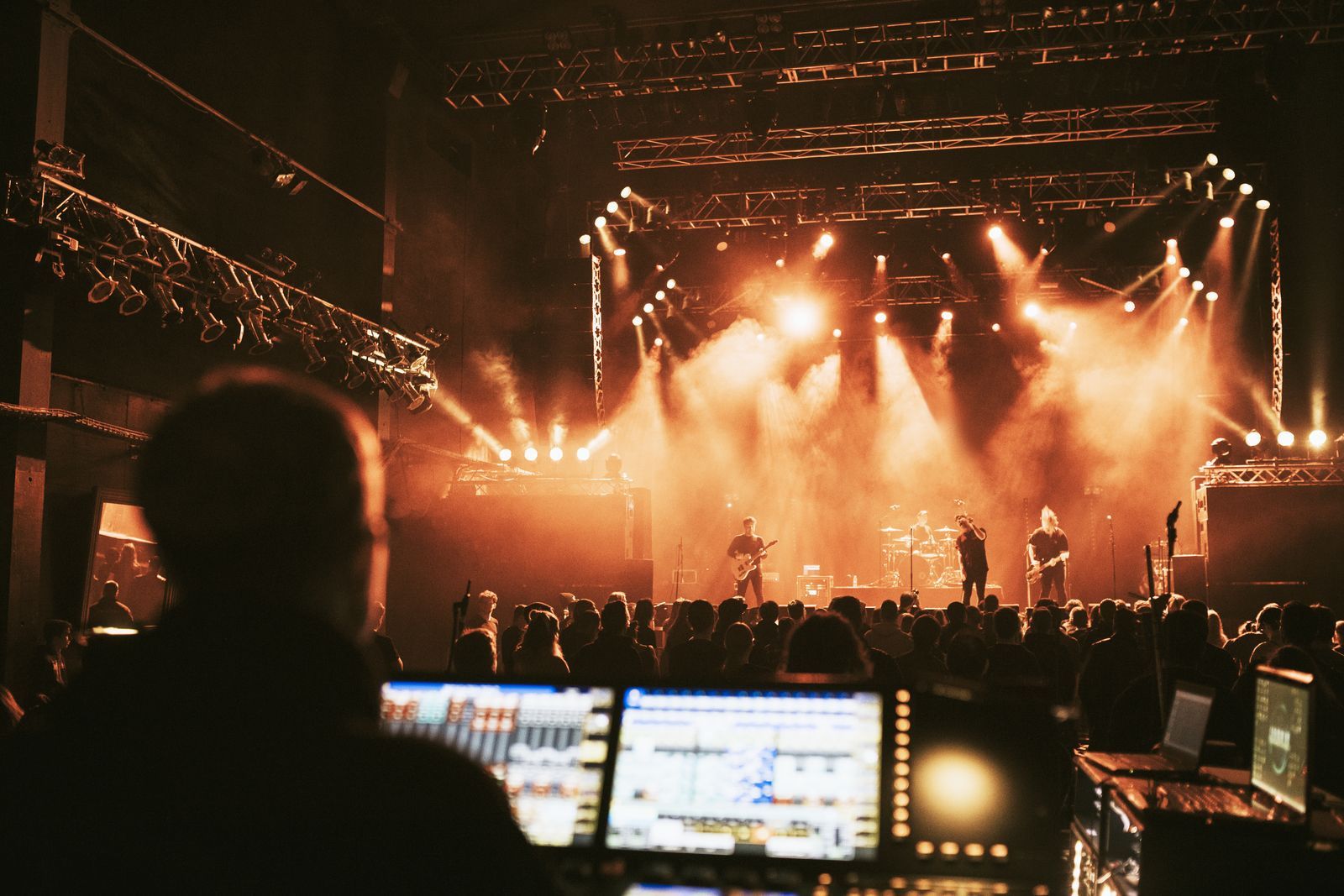
- Live bands. With drums, bass, guitars and vocals there is a mix to be done, and that mix changes with every song. Without a technician, a live set just sounds like noise. See sound for concerts.
- Conferences and seminars with several speakers. Microphones opening and closing, videos cutting in, panel discussions, questions from the audience. See sound for conferences.
- Official and institutional events. If the microphone fails at the moment of the speech, the event grinds to a halt and everyone notices. See institutional events.
- Weddings with lots of parts. Ceremony, drinks reception, banquet, a video surprise and dancing are five different set-ups on the same day. See sound for weddings.
- Large set-ups. A line array is never handed over without an operator: tuning it requires measurement and on-site decisions.
- Events that are recorded or broadcast. Audio going to the streaming feed needs someone monitoring it in real time.
- Flamenco. Singing, guitar, palmas (hand-clapping) and dance, with extremely delicate levels and a high risk of feedback. See sound for flamenco.
Not worth it
Events where you can do without one
We'll be straight with you, because we'd rather you came back to us than bill you for something you don't need:
- Background music and one or two microphones. First Communion parties, birthdays, meetings, simple presentations. We leave the system set up, tested and with two controls explained.
- A DJ booth with the system already tuned. If the DJ runs their own set and the overall level is set, nobody else is needed. See DJ equipment.
- Karaoke or small-group activities. See karaoke.
- Short events with a single speaker. A twenty-minute opening with one microphone does not need an operator.
The middle option
There is a third way that solves a lot of cases: set-up with a technician who leaves before the event. The technician sets up, tunes the system, runs the check with whoever is going to speak, leaves everything configured and explained, and then goes, staying reachable by phone. It costs considerably less than a full day and covers the moment that really decides whether it will sound good.
And a word of warning
Don't book a technician and then not let them do their job. If the control position is tucked in a corner behind a pillar, or nobody tells them the running order, the technician can't anticipate anything. A good spot for the desk (out in the audience, not beside the stage) and a run sheet for the event are worth more than an extra half hour of service.
How we work
The service, step by step
You tell us the event running order
What happens and in what order: who speaks, when the music comes in, whether there's video, whether there's a performance.
We decide together whether you need one
If we see it adds nothing, we'll tell you. If we see that going without a technician is a gamble, we'll tell you that too.
Set-up and testing with time to spare
We set up in advance and test with the real people, not with our own voices from the stage.
Control during the event
The technician mixes from the control position, following the programme and whatever changes the organisers make along the way.
Take-down at the end
We collect everything when the event finishes, whatever the time, without you having to stay behind to supervise.
Related equipment
Where a technician is booked most often
These are the pages where the service with a technician almost always appears in the quote.
Frequently asked questions
Questions about the service with a technician
Is the technician included in the rental price?
No. Transport, set-up, testing and take-down are always included; a technician who stays on during the event is always quoted separately, so you only pay for one when they add something. For some set-ups (line array, concerts, conferences, live video production, streaming and simultaneous interpretation) a technician is essential, so in those cases they are part of the proposal from the start, but still as a separate line item with the price clearly shown.
How many hours does it cover?
It is agreed depending on the event: there are set-up-plus-event days and there are set-up-and-tuning-only services. Tell us the real schedule, including the expected finish time, and we'll fit it accordingly.
What if my event runs over?
We talk about it at the time and agree on it. What we won't do is walk out halfway through a wedding because the clock says so; we do ask that your timings are realistic from the start.
Can the technician run the lights as well?
For simple set-ups, yes: scenes are programmed and triggered from the same control position. For events with a full light show, a dedicated technician is advisable. See lighting.
Can someone from my team run the desk?
Yes, and we leave it ready for that: a locked configuration, labelled channels and a clear explanation. It works well as long as the event has no surprises; for events with many parts, it's risky.
Does the technician talk to the other suppliers?
Yes, it's part of the job. Coordinating with the caterers, the photographer and whoever is keeping time avoids most cut-outs and awkward silences.
Equipment
The equipment, set up and cabled
This is the equipment this page talks about, and how it looks once it is set up.
Does your event need a technician?
Tell us your running order and we'll give you an honest answer, even if that answer is that you don't need one.
