
Monitoring
Stage monitors so performers can hear themselves
The audience hears the front-of-house system; the singer hears what the stage sends back. If that mix is wrong, the performance goes out of tune even if it sounds perfect out in the audience.
- Format
- Floor wedges
- Sends
- Independent for each musician
- Tuning
- Sound check included
- Area
- Seville and province
What monitoring is
The sound the audience never hears
The front speakers point at the audience, so little of their sound reaches the stage, and it arrives late. The monitor feeds back to the performer what they need to hear to play and sing in tune.
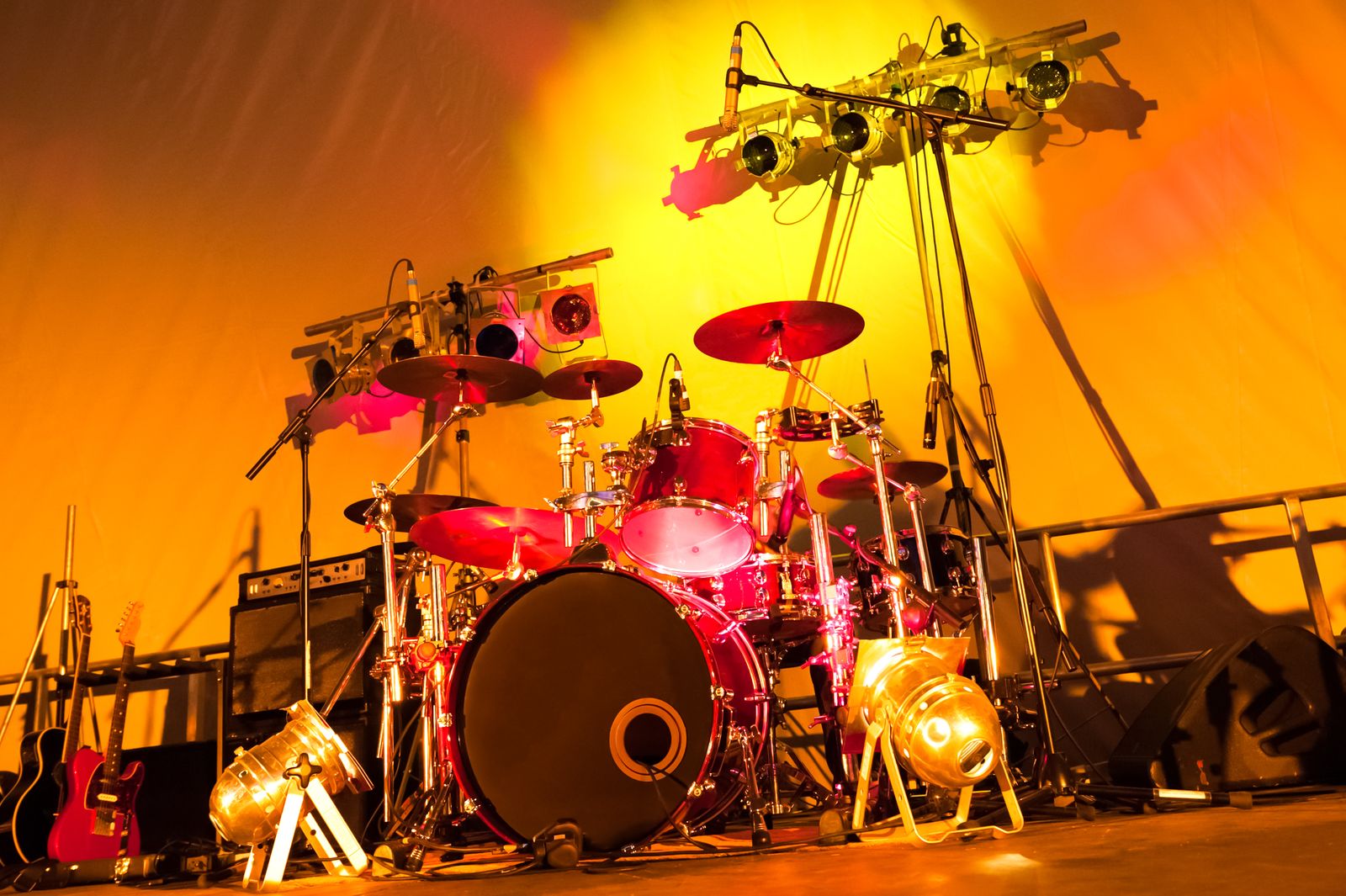
A stage monitor, also called a floor wedge, is an angled speaker placed on the floor pointing at the musician. It sends back a different mix from the one the audience hears: usually more of their own voice, a little of a reference instrument and not much of anything else. At a live show with several musicians there are usually several independent sends, one per position, because the guitarist and the singer need to hear different things.
When you need one
- Any live band, however small. Without monitors, the singer is guided by what bounces off the back wall, and that arrives late.
- Flamenco: singing, guitar and handclaps overlap a lot, and the compás (rhythm) depends on everyone hearing the same thing. See sound for flamenco.
- Choirs, soloists and performances to a backing track, where the performer has to follow a recorded track.
- DJ booths, where the booth monitor does the same job: letting the DJ hear what is being mixed without depending on the delay from the front-of-house speakers.
What happens without one
The performance falls apart. The singer strains because they cannot hear themselves, the guitarist turns up the amp, the drummer plays harder, and within three songs the stage is chaos that also bleeds into every microphone. A couple of well-tuned wedges prevent that, and cost far less than rescuing a ruined live show.
Formats
Types of monitoring
Floor wedges
The classic format: rugged, powerful and with nothing to plug into the musician. It is what almost every band expects to find.
Independent sends
Each stage position gets its own mix. The more sends, the more finely the monitoring can be tuned and the less overall volume is needed.
DJ booth monitor
A wedge pointing at the DJ so they can mix with a proper reference, without the delay from the front-of-house system.
Sidefill
Side speakers that reinforce the whole stage. Useful on wide stages and with large line-ups.
Control from the front-of-house desk
With a digital console the sends are managed from the control position, and on large set-ups a separate monitor console can be installed.
Tuned against feedback
Each wedge is EQ'd against the microphone in front of it, which is where the squeal happens if it is not done properly.
How many
How many wedges and sends your stage needs
You count positions, not musicians: two backing singers standing together can easily share a wedge, whereas the drummer, even on their own, needs one of their own and quite a lot of level. As a guide:
- Solo artist or acoustic duo: one or two wedges; a single send may be enough.
- Band of four or five: three or four wedges and, ideally, three separate sends.
- Flamenco group (cuadro flamenco): wedges for the singer, guitar and dancer, each with very different mixes.
- Large line-ups: wedges for each position plus sidefill, and a dedicated monitor console.
The rider rules
If the band has sent a rider, it will list the number of sends and what each member wants to hear. It is the most useful information you can pass on to us and avoids arguments on the day of the gig. If you can't make sense of it, here we explain how to read a technical rider without being a technician.
Monitors and in-ears
Personal in-ear monitoring solves the problem at its root (the stage goes quiet and each musician hears their own mix), but it requires a band that is used to it and enough channels. When the set-up calls for it, we propose it; for most mid-sized live shows in Seville, well-tuned wedges are still the right answer.
How we work
From line-up to sound check
You send us the line-up or the rider
How many musicians, what each one plays and whether the band has any monitoring preferences.
We prepare the sends and wedges
With the necessary desk channels and the stage cabling labelled by position.
We set up and cable in good time
The stage is set up before the band arrives, with the lines in place and tested.
Sound check position by position
Each send is tuned with the musician in their spot, not by ear from the control position.
Fine-tuning during the first song
With a sound technician on hand, the first few minutes are used to correct what only shows up once the stage is full.
Equipment that goes with it
A complete stage
Monitoring is one piece of a live-show set-up. These are the others.
Frequently asked questions
Monitoring FAQs
Can I put on a live show without monitors?
You can, but it will go badly unless it is a solo artist with a guitar at low volume in a small room. As soon as there are drums or the front-of-house level goes up, the stage loses its reference and the performance suffers.
How many separate sends are needed?
Three cover most mid-sized bands: lead vocal, instruments and drums. If the rider asks for more, we set up more, and for that a digital console is advisable.
Do monitors cause feedback?
They can, because they point straight at a microphone. It is avoided by EQ'ing each wedge, using microphones with a suitable pickup pattern and keeping levels sensible. We explain it in how to avoid feedback.
Can a normal speaker be used as a monitor?
In a pinch, laid on its side and pointing at the musician, it does something. But a wedge is designed with the right angle and response for the job, and the difference shows above all in how loud it can go before it squeals.
Is the sound technician included?
It is quoted separately, as with all our set-ups. For a live show with several sends we strongly recommend it, because monitoring is adjusted during the performance, not just beforehand. You can find out more under sound rental with a technician.
Equipment
The equipment, set up and cabled
This is the equipment this page talks about, and how it looks once it is set up.
Got a live show in Seville?
Send us the line-up or the rider and we will prepare the whole stage: monitors, lines and microphones.
