
Flamenco and tablao
Sound for flamenco: cante, guitar and dance
Flamenco is the genre that least forgives a poor set-up. If it sounds like a PA announcement, the nuance of the cante (singing) and the rhythm of the zapateado (footwork) are lost, and no amount of volume will fix it.
- Line-ups
- Solo cante, cante and guitar, full cuadro
- Key
- Dedicated microphones and feedback control
- Venues
- Tablao, peña, courtyard, caseta and theatre
- Technician
- Quoted separately. Highly recommended
What happens on the tablao
Three very different acoustic sources a metre apart
Cante, guitar and dance share a tiny space and compete with one another. The cante needs closeness, the guitar needs body without feeding back, and the zapateado produces a strong impact that bleeds into every open microphone.
The cante
It's what people have come to hear and the first thing to suffer. A microphone that's too bright makes the voice sound metallic; a badly placed one forces the level up and causes feedback through the wedges. We work with microphones chosen for close vocals, at just the right level to support the voice rather than make it sound amplified. In a small peña, sometimes the best setting is barely amplifying at all.
The guitar
It depends on whether it has a pickup or is miked. With a microphone the sound is far more natural, but the headroom before feedback shrinks and you have to watch where the monitors point. A pickup gives stability but loses the warmth of the wood; we compensate with EQ. In line-ups with two guitars, each needs its own channel and settings, because they don't sound the same.
The dance and the floor
Zapateado is rhythmic information, not noise: if you can't hear it, the show falls flat. It is picked up with microphones aimed at the tablao, positioned so they don't capture the monitors. And everything depends on the floor: a stage platform with the right surface gives a crisp, full-bodied strike; a terrazzo or albero (compacted sand) floor sounds of nothing. At outdoor events, the platform is the first thing to sort out.
Palmas and cajón
A full cuadro adds palmeros (hand-clappers) and cajón. The palmas are miked as a group, not one by one, and the cajón has far more low end than you'd think: badly set, it swallows the entire cante.
By line-up
What you need depending on who's performing
| Line-up | Channels | Set-up |
|---|---|---|
| Solo cante or cante and guitar | 2 to 4 channels | One monitor per performer, a small system and conservative settings |
| Cante, guitar and dance | 6 to 8 channels | Floor microphones for the zapateado and two monitor sends |
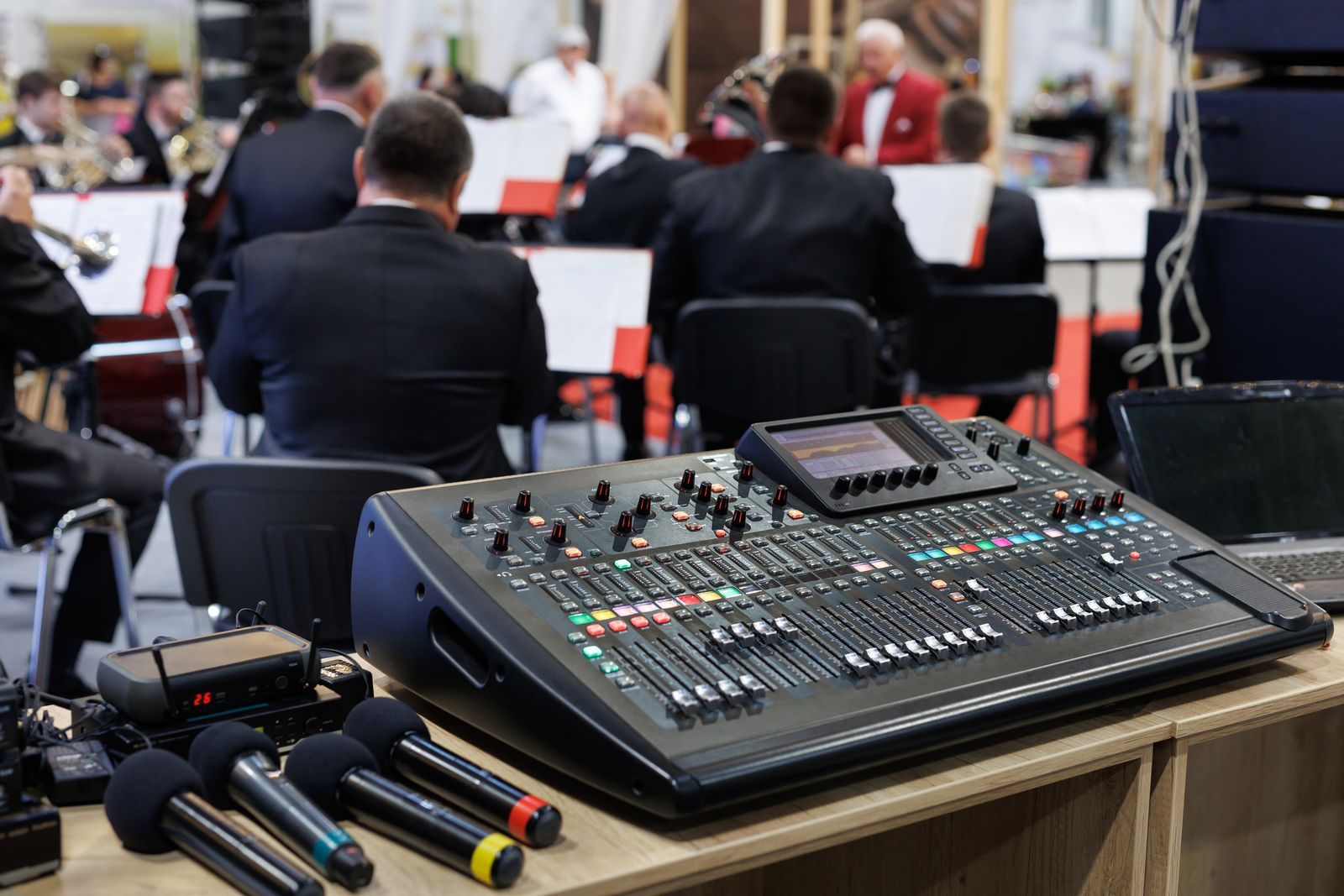
| Full cuadro with palmas and cajón | 10 to 14 channels | Digital mixing desk, several sends and feedback control |
| Show with a band | 16 channels or more | PA sized to the room, independent monitor mix and a dedicated technician |
Venues
Tablao, peña, courtyard, caseta and theatre
Tablao and peña. Small spaces, low ceilings and the audience very close. The risk is too much level: in twenty square metres, a big system simply doesn't fit acoustically. The aim is reinforcement, not amplification.
Courtyard or garden. Outdoors the reverberation disappears and the cante loses body. Here you do need a distributed system and a bit more level, with a well-built stage platform because the ground won't help.
Feria caseta (fair marquee). Very high ambient noise and people talking. If there's a performance, the caseta set-up has to include enough monitors and channels, not just the music system.
Theatre or assembly hall. Good acoustics to begin with and a seated audience. The job is to blend in with what already sounds good in the room, and often to use less equipment than seems necessary.
Lighting matters almost as much: warm frontal light, defined shadows for the dance and no flicker. For romerías (pilgrimage festivals), May Crosses and parties with a flamenco performance, see this set-up; for Christmas zambombas (Andalusian Christmas parties), the Christmas one.
How many performers, and in what space?
Tell us the line-up, the venue and whether there's a stage platform. We'll design the set-up so it sounds like flamenco, not like a PA system.
Frequently asked questions
Questions from artists and organisers
Why does the cante sound like a PA announcement at so many events?
Almost always for three reasons: a microphone unsuited to close vocals, too much level to make up for poorly placed speakers, and aggressive treble EQ so that it's "intelligible". With conservative settings and well-placed speakers, the problem disappears.
Does the zapateado need to be miked?
In a small tablao, often not: it carries on its own. Outdoors, in a square or with a large audience, yes, otherwise the dance goes silent. What you always need is a platform that resonates.
Can you set up a stage platform that sounds good for dancing?
Yes. It's part of the set-up, not an accessory: the floor is part of the instrument. We cover it in stages and platforms.
How many monitors does a cuadro need?
At least two independent sends: one for the cante and another for guitar and dance. For larger cuadros, three or four. The cantaor needs to hear themselves above everything else.
Is a technician worth it for a half-hour performance?
Yes, more than in almost any other genre. Settings change between a cante and a bulería, and channels have to be opened and closed depending on who's performing. With the system open and nobody on the desk, feedback creeps in.
Do you record the performances?
We can take a direct feed from the desk, which sounds far better than an ambient recording. If you want video too, we can add streaming or live video production.
Quote
Get a quote for your show
Line-up, date, venue, expected audience and whether there's a stage platform in place or we need to bring one.
How it looks
Set-ups for this type of event
Examples of the equipment and set-up an event like yours usually needs.
