
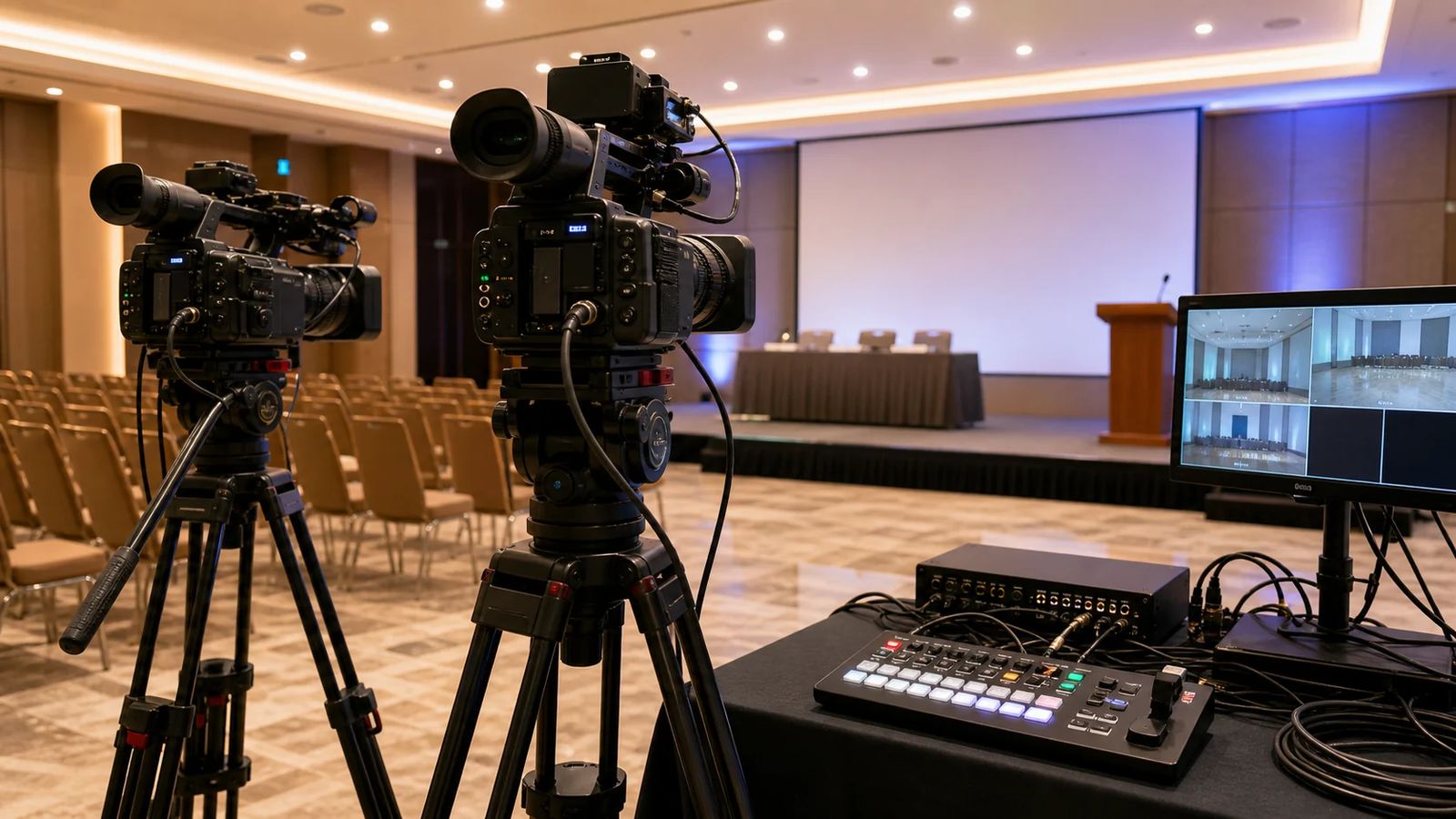
Projection surfaces
Projection screen rental in Seville
The surface the projector works on. It varies depending on where the equipment goes, how many people are watching and whether it can be set up in front or has to go behind.
- Types
- Tripod, frame and rear projection
- Aspect ratio
- 16:9 y 4:3
- Sizes
- From 1.80 m to large format
- Set-up
- Included
- Area
- Seville and province
What it is and how it differs
This isn't the projector: it's the surface it projects onto
People mix them up all the time. The projector is the machine that emits the light; the projection screen is the surface that receives it. They are almost always hired together, but they are chosen by different criteria.
Why a bedsheet or the wall won't do
A projection surface is made to reflect light evenly and with a controlled viewing angle. A wall has its own texture and tint; untensioned fabric ripples and distorts text. With a proper screen you gain contrast, deeper blacks and a black border that frames the image and makes it look sharper than it really is. That black frame is half the trick.
Nothing to do with an LED screen
An LED screen generates its own light and needs no projector. A projection screen emits nothing by itself: without a projector in front or behind, it's just white fabric. If your question is «LED or projection?», the answer lies in the light on site; if it's «which projection screen?», the answer lies in the set-up.
Types
Tripod, frame or rear projection
Three set-up formats for three different situations.
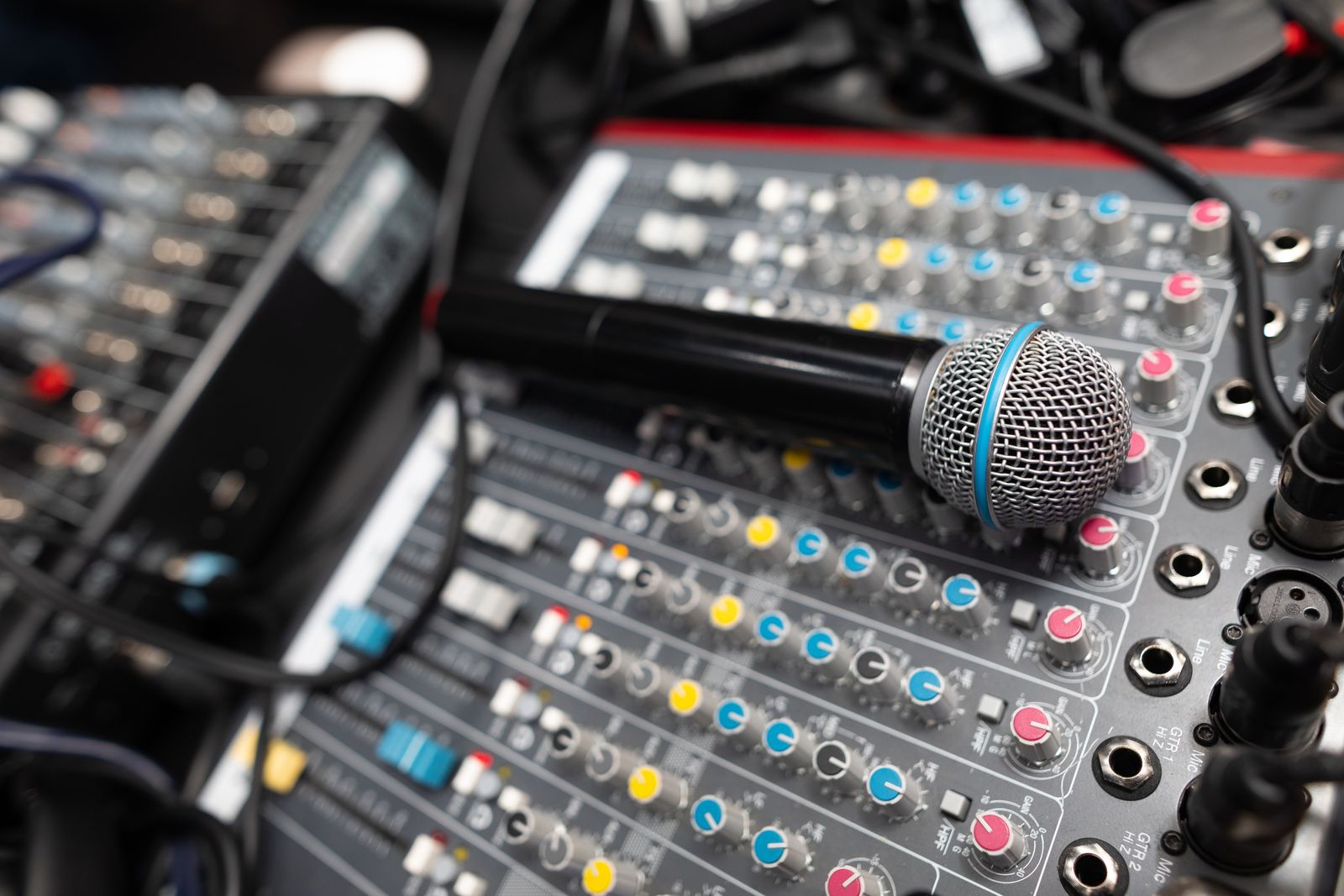
01 / Tripod
Tripod screen
It unfolds in two minutes and packs away just as fast. Sizes from 1.80 to 2.40 m. The option for meetings, training sessions and small events where set-up has to be instant.
02 / Frame
Tensioned-frame screen
Fabric tensioned over an aluminium frame, without a single wrinkle and with a black border. This is the screen used at conferences and events with large audiences, and it's raised on legs or truss.
03 / Rear
Rear projection
Translucent fabric with the projector behind it. Nobody blocks the beam, there are no speaker shadows and the equipment stays out of sight. It needs clear space behind.
Sizes and aspect ratio
What screen size your room needs
The size isn't chosen by how big a screen will fit, but by how far away the back row sits and what needs to be read on screen.
| Room depth | Approximate size | Context |
|---|---|---|
| Up to 6 m deep | 1.80 × 1.80 m or 2 m wide | Up to about 30 people |
| 6 to 10 m deep | 2.40 m wide | Training rooms and large meetings |
| 10 to 16 m deep | 3 × 2 m | Presentations and company events |
| 16 to 24 m deep | 4 × 2.25 m or larger | Conferences and hotel function rooms |
| Over 24 m deep | Large format or LED screen | Consider two side screens |
Aspect ratio and positioning
16:9, 4:3 and the height of the bottom edge
Choose the aspect ratio before designing the slides
Today's standard is 16:9, which is what current laptops, cameras and projectors output. 4:3 survives in scanned documents and older presentations. What matters is deciding in advance: if the screen is 16:9 and the content is 4:3, you get bars at the sides; if it's the other way round, the image is cropped top and bottom or everything looks smaller. When there are several speakers with different presentations, it's a good idea to send them the aspect ratio in writing along with the invitation.
The height of the bottom edge
With a seated audience on a flat floor, the bottom of the image must sit above people's heads: at least around 1.20 m off the floor, higher if there are many rows. That's why frame screens are mounted on tall legs or flown from truss, and why the height should be coordinated with the stage or platform if the speaker is raised.
Mistakes we often see
Putting the screen right behind the lectern, so the speaker blocks half the image. Placing it opposite a window with no curtain. Accidentally lighting it with the stage lights. And setting up a huge screen in a room where the projector doesn't have the lumens to fill it: the bigger the image, the more the light is spread out and the dimmer it looks.
What the rental includes
How it arrives and how it's set up
We measure the room
Depth, clear height, where the audience sits and where the speaker stands.
We choose the format
Tripod for quick jobs, frame for a polished look, rear projection when you can't project from the front.
We set up and align
Screen tensioned and plumb, with the image framed inside the black border and no keystone distortion.
We test with the real content
Using the laptop that will actually be used, not a test one.
We take it down when it's over
Collection included in the same service.
Tripod, frame or rear projection?
Send us the room dimensions and the type of event. We'll tell you which one fits and with which projector.
Related equipment
Usually hired with
Frequently asked questions
Questions about projection screens
Does the screen include the projector?
No: they are two separate rentals that almost always go together. You can rent just the screen if you already have a projector, or the complete package with the lens matched to your room.
How is it different from an LED screen?
An LED screen emits its own light and can be seen in daylight or sunshine. A projection screen is a passive surface: it needs a projector and a room with controlled lighting. In return, it's much more affordable and goes up in minutes.
What's the most requested size?
For medium-sized rooms, the 3 × 2 m frame screen. For meetings and training sessions, the 2.40 m-wide tripod screen. Above 4 m wide we're talking large format, and ceiling height and lumens need checking.
Can it be set up outdoors?
Yes, for night-time screenings, but wind is the enemy: a tensioned screen acts like a sail. It's set up with ballast and bracing, and taken down if there are strong gusts.
What exactly is rear projection?
Placing the projector behind a translucent screen instead of in front of it. The audience sees the image from the other side and nobody can step into the beam or cast a shadow. It needs between 2 and 4 m of clear space behind, depending on the lens.
Does the room need to be darkened?
You don't need to switch off all the lights, but you do need to stop light falling directly on the screen. If the light can't be controlled, the right answer is LED, not a more powerful projector.
Video
Screens, projection and control
The video equipment and the control position it is operated from during the event.
